


Jean-Pierre Charbonneau
A criminology graduate from the Université de Montréal, Jean-Pierre Charbonneau first made his mark as an investigative journalist covering organized crime and corruption for the daily newspapers *Le Devoir* and *La Presse*. Elected to the National Assembly at the age of 26 in 1976 as part of René Lévesque’s Parti Québécois, he went on to be re-elected five more times before retiring from political life in 2006. During his years in the Quebec legislature, he chaired several parliamentary committees, served as parliamentary assistant to the Premier, held the position of President of the National Assembly, and ultimately served as Minister for the Reform of Democratic Institutions and Canadian Intergovernmental Affairs. Deeply involved in international aid—having once led a team of Quebec development workers in Central Africa—Jean-Pierre Charbonneau is now an educator, speaker, board member, strategic advisor, and public affairs commentator. Since June 2018, he has held the rank of Officer of the National Order of Quebec.

Sylvie Cantin
Holding a master’s degree in mathematics and a bachelor’s degree in sociology, Sylvie Cantin worked for the federal government across various departments. She specialized first in performance measurement and later in public consultation. She enjoys connecting stakeholders with diverse perspectives to help find solutions. Now retired, she campaigns for electoral reform, aiming to better reflect the viewpoints of the population.

Louis Bibaud
A resident of Richelieu in the Montérégie region, Louis is a lawyer by training, having earned a bachelor’s degree in legal studies from UQÀM. He served as a legal and union advisor at the Confédération des syndicats nationaux (CSN) for over thirty years, holding various roles—including litigator, negotiator, coordinator, and political advisor. Notably, he authored the document that laid out the proposal—adopted at the organization’s 2002 congress—regarding potential electoral system reform, and he represented the CSN before the MDN (Ministry of National Defence) between 2000 and 2002.

Catherine McDonald
A political science graduate from Université Laval, Catherine has spent the majority of her career in the field of citizenship education, working in cities including Ottawa, Toronto, and Montreal. She has a particular passion for working with young people, which led her to join the Roméo Dallaire Foundation as Executive Director. In addition to serving on the DND (Department of National Defence) board, she sits on several other boards focused on youth-related initiatives or democratic causes. She also recently earned a certificate in management.

Raphaël Canet
Holding a PhD in sociology from UQAM and the Université de Paris-IV Sorbonne, he studies global civil society mobilizations aimed at humanizing globalization and democratizing governance. A specialist in the Quebec national question, he coordinated the Canada Research Chair on Globalization, Citizenship and Democracy at UQAM from 2001 to 2004 and completed a postdoctoral fellowship at INRS-UCS from 2004 to 2006. In 2007, he coordinated the organization of the first Quebec Social Forum. For ten years, from 2008 to 2017, he taught at the School of International Development and Global Studies at the University of Ottawa. Concurrently, from 2008 to 2015, he oversaw Quebec civil society collectives at international forums, involving over 500 participants from seven countries. In 2016, he co-coordinated the organization of the World Social Forum in Montreal, which brought together more than 35,000 participants from 125 countries. Since 2010, he has taught sociology at Cégep du Vieux Montréal. He joined the MDN in 2019 as the lead for civil society mobilization.

Marie-Claude Bertrand
Throughout her career, Marie-Claude Bertrand worked in various higher education institutions. In retirement, she has focused her efforts on movements advocating for a socio-ecological transition at the local level. Her involvement with the MDN reflects this commitment to strengthening democracy in Quebec through the reform of the electoral system and increased citizen participation in the political sphere.

Jean-François Delisle
A member of the Thetford Mines City Council since November 3, 2013, Jean-François Delisle also serves as a coordinator, coach, and instructor for the *ASP* (Attestation of Vocational Specialization) program in Business Launching at the *Le Tremplin* vocational training center. He holds a bachelor’s degree in business administration from Université Laval and a master’s degree in public administration from the *École nationale d’administration publique* (ENAP).

Stéphane Rouillon
For over twenty years, Stéphane Rouillon has taken an interest in the reform of electoral systems. He has participated in various forums and contributed numerous position papers to a range of organizations. He holds a bachelor’s degree in engineering physics, a master’s degree in applied sciences (mechanical engineering), and a doctorate in operations research from the École Polytechnique de Montréal, where he was affiliated with GERAD (Group for Research in Decision Analysis). His professional background includes work in electrical engineering at CAE Electronics Inc., as well as in civil engineering at Tecsult Inc., SNC-Lavalin Inc., and the City of Longueuil. In recent years, he has served as a partnership development officer at the Centre de recherches mathématiques (CRM), a senior partnership advisor at the Institute for Data Valorization (IVADO), Director of External Relations at the Centre de recherche en informatique de Montréal (CRIM), and a research associate at Concordia University.

Jacques Jodoin
A resident of Beloeil in the Montérégie region, married for 48 years, and a happy father of three children and seven grandchildren, Jacques—a retired IT professional with 32 years of experience—has long been involved in various volunteer roles, including serving as a treasurer and an activist for political parties and cooperative organizations. A man of many interests, his commitment to participatory democracy and civic engagement has led him to take concrete action with the *Mouvement Démocratie Nouvelle* (New Democracy Movement).

Sophie Lachance
Following a university background in communications and political science, Sophie works in public participation for the City of Sherbrooke, where she focuses on involving citizens in municipal projects.
She places great importance on the role of the public in a democracy and has a particular interest in young people—a group whose civic and electoral participation she analyzed in her master’s thesis.
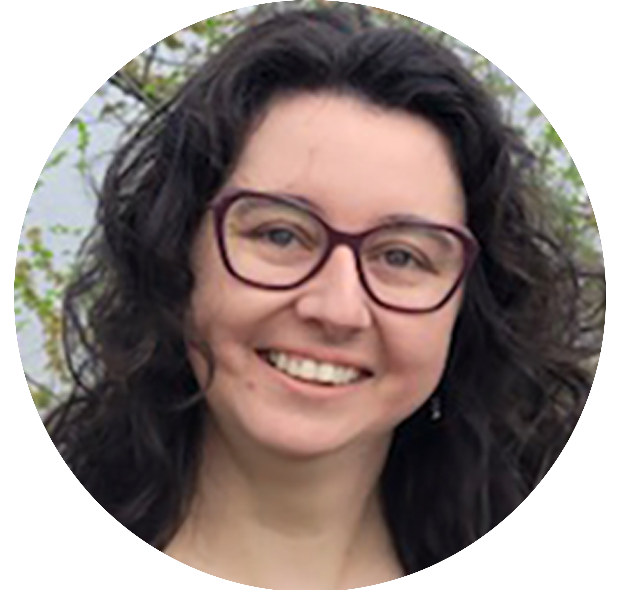
Jacinthe Villeneuve
Her involvement with the *Mouvement Démocratie Nouvelle* (MDN) began in 2014, driven by a desire to actively contribute to the development of her community. This journey is rooted in extensive professional experience within the social services sector, a field where civic engagement plays a central role.
This commitment has taken several forms, including:
• Regional mobilization, through the founding of an action group aimed at uniting citizens around shared local issues.
• A sustained dedication, with her return to the MDN marking a renewed commitment to participate in the movement’s ongoing initiatives.
Electoral reform remains a fundamental priority for her. This cause is based on the principle that a government should faithfully reflect the diversity and aspirations of the citizens it represents. She continues to contribute to this mission today with energy and conviction.
I began my involvement with the MDN in 2014, motivated by a deep commitment to my community.
As a social services professional, civic engagement has always been close to my heart. Driven by a desire to contribute to civic life, I founded a group to mobilize people around a common issue in my region.
After a hiatus, I am returning to the MDN today with enthusiasm, ready to get back to work.
Electoral reform is a cause I care about deeply. I firmly believe that a government should be a true reflection of the citizens who elected it. I am happy to contribute to this effort once again, with energy and conviction.
